
April 26, 2025 — The Heart Rhythm Society (HRS) Call-To-Action: Improved MRI Access for Patients with Cardiovascular Implantable Electronic Devices addresses persistent barriers to magnetic resonance imaging (MRI) for patients with cardiovascular implantable electronic devices (CIEDs), despite substantial evidence supporting the safety of MRI under appropriate conditions.
Patients with CIEDs—including pacemakers and implantable cardioverter-defibrillators—frequently require MRI for accurate diagnosis and management of a wide range of conditions. However, access remains inconsistent due to institutional policies, outdated safety concerns, workflow challenges, and evolving device labeling restrictions.
This statement highlights the urgent need to eliminate non–data-driven barriers and improve equitable access to clinically indicated MRI. It provides practical, actionable recommendations across clinical, operational, and policy domains, emphasizing the importance of standardized protocols and multidisciplinary collaboration.
Key areas addressed include:
- Persistent access challenges despite evidence supporting MRI safety
- Variability in institutional workflows and imaging protocols
- Regulatory and labeling complexities affecting MRI eligibility
- Clinical and administrative burden on electrophysiology teams
- Reimbursement and resource considerations impacting care delivery
The document places strong emphasis on collaboration between cardiology/electrophysiology and radiology teams, advocating for a structured, team-based approach to safely manage patients with CIEDs undergoing MRI. Ultimately, the statement calls for coordinated action among clinicians, institutions, industry, and regulatory bodies to modernize policies, streamline workflows, and ensure that patients with CIEDs are not denied access to essential diagnostic imaging.
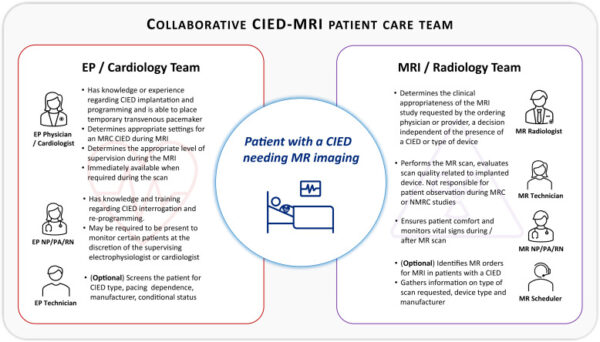
Figure 1. The HRS collaborative cardiology-radiology CIED-MRI team illustrates a multidisciplinary care model, outlining the roles of electrophysiologists, cardiologists, radiologists, advanced practice providers, and technical staff in coordinating safe and efficient MRI access. This model highlights shared responsibility for patient evaluation, device management, imaging execution, and monitoring.
